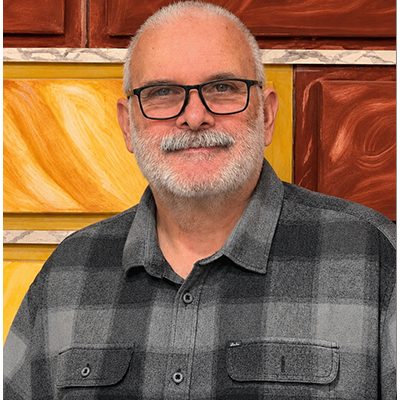
Prof. Vincenzo Palleschi
Biography
Vincenzo Palleschi is a Research Director at the Institute of Chemistry of Organometallic Compounds (ICCOM) of the Italian National Research Council (CNR) in Pisa, Italy, where he leads the Laboratory of Laser and Applied Spectroscopy.
A physicist by training, he has been actively involved in Laser-Induced Breakdown Spectroscopy (LIBS) research since the early 1990s, contributing to the development and dissemination of the technique in Europe and internationally. He chaired the first International Conference on LIBS, held in Pisa in 2000.
His research interests encompass laser-based analytical techniques, atomic and molecular spectroscopy, plasma diagnostics, quantitative elemental analysis, and the application of spectroscopic methods to cultural heritage, environmental science, and materials characterization. His recent activities also focus on the integration of complementary spectroscopic techniques and advanced data analysis methods.
He has authored or co-authored more than 300 scientific publications and is actively involved in teaching, international scientific collaborations, and editorial activities.
Laser-Induced Breakdown Spectroscopy: From an Emerging Technique to a Mature Analytical Tool — Achievements, Challenges and Future Perspectives
Prof. Vincenzo Palleschi
Institute of Chemistry of Organometallic Compounds
Research area of CNR, Pisa (Italy)
Laser-Induced Breakdown Spectroscopy (LIBS) has been known by this name since the early 1980s, although its origins can be traced back to pioneering studies conducted almost immediately after the invention of the laser, and even further back to the foundations of atomic emission spectroscopy.
Drawing on more than thirty-five years of personal involvement in the LIBS community, this talk will offer a critical perspective on the evolution of a technique once regarded as a potential “superstar” of analytical chemistry. It will examine how many of its original promises have actually been fulfilled, which expectations remain unmet, and how technological advances and new analytical approaches have opened opportunities that were hardly imaginable in its early days. Finally, the talk will explore the challenges that still lie ahead and discuss the future prospects of LIBS as a mature analytical technique in an increasingly complex and rapidly evolving analytical landscape.